
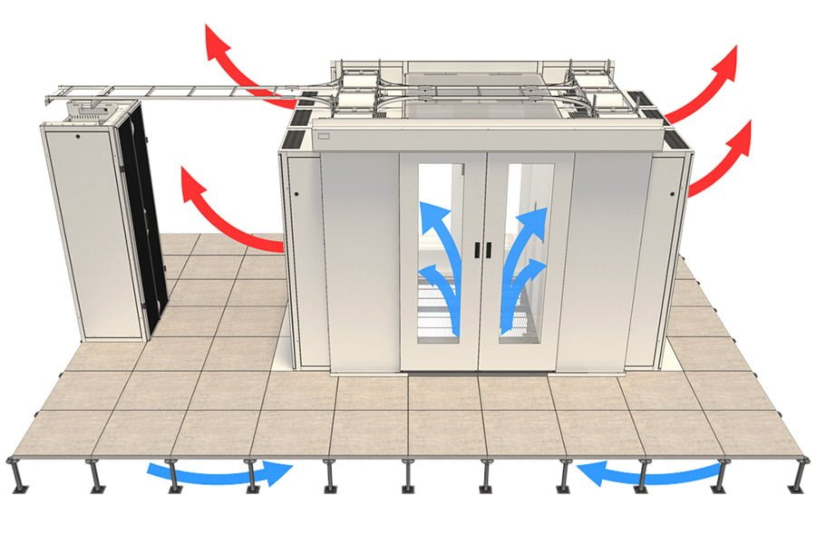
In the evolving landscape of 2026, the primary challenge for data center operators is no longer just “adding more cooling”—it is the precision management of airflow. As rack densities climb to support intensive AI and cloud workloads, the traditional open-aisle configuration has become an operational liability. The most significant insight for modern facility managers is realizing that cooling efficiency is a byproduct of successful separation.
The Physics of Thermal Efficiency The most common cause of high Power Usage Effectiveness (PUE) isn’t inadequate air conditioning; it is bypass airflow and recirculation. When cold supply air bypasses the equipment intake or when hot exhaust air wraps back into the cold aisle, the entire thermal ecosystem destabilizes. By implementing a rigid or curtain-based containment system, you create a dedicated pressure zone that forces every cubic meter of chilled air through the server chassis. This doesn’t just lower temperatures; it allows the cooling units to operate at higher setpoints, drastically reducing energy consumption.
Extending the Lifecycle of Assets Consistency is the key to hardware longevity. In an uncontained environment, “hotspots” can cause server fans to run at maximum RPM, increasing mechanical wear and power draw. Even worse, the thermal stress of fluctuating inlet temperatures can lead to micro-fractures in server motherboards over time. A professional containment strategy ensures a uniform temperature gradient from the bottom to the top of the rack, extending the operational life of your IT assets by up to 25%.
Looking Ahead: Scalability and the “Green” Mandate As global regulations on carbon footprints tighten, “Energy Savior” solutions are transitioning from optional upgrades to mandatory infrastructure. The data centers that will thrive in the next decade are those that treat airflow as a science. By integrating advanced accessories like brush grommets and blanking panels into a broader containment strategy, operators can reclaim “stranded capacity”—allowing them to house more equipment in the same footprint without the need for expensive facility expansions.