
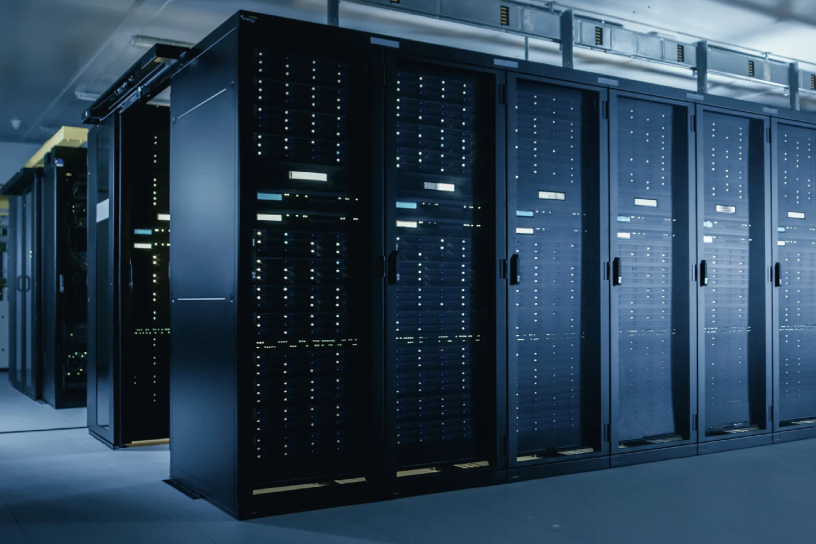
As we move through 2026, Power Usage Effectiveness (PUE) remains a standard benchmark, but it no longer tells the full story of data center health. With the rise of high-density AI clusters, the real challenge has shifted from “how much power we use” to “how effectively we move heat.” The secret to managing these 100kW+ racks isn’t just more cooling; it’s the mastery of airflow dynamics.
The High-Density Heat Trap Traditional cooling strategies often fail in modern environments because they rely on volume rather than precision. When hot and cold air streams mix, even the most expensive CRAC units become inefficient. The goal in a modern facility is to create a “pressure-neutral” environment. By using total aisle containment, operators can ensure that every cubic foot of chilled air is pulled through the server intake rather than bypassing the rack entirely.
The Role of Intelligent Monitoring Strategic insights now come from the “granular edge.” Modern infrastructure requires more than just a thermometer at the end of a row. Real-time thermal mapping—utilizing sensors at the top, middle, and bottom of every cabinet—allows for automated cooling adjustments. This precision prevents “thermal runaway” and extends hardware life by eliminating the micro-cycles of expansion and contraction caused by temperature fluctuations.
Looking Ahead For infrastructure to be truly “future-proof,” it must be adaptable. The facilities that will thrive in this AI-driven decade are those that treat airflow as a precision science. By integrating modular containment with intelligent power monitoring, operators can achieve a level of resilience that far exceeds what a simple PUE score can reflect.